When an inquiry contains only a model name, the matching risk can still be high. A model may span several generations, engine variants, drivetrains and regional specifications. Adding the VIN or chassis code gives the supplier a more precise starting point, but it should be used together with the OE number and product position rather than as a replacement for them.
What a VIN can tell you
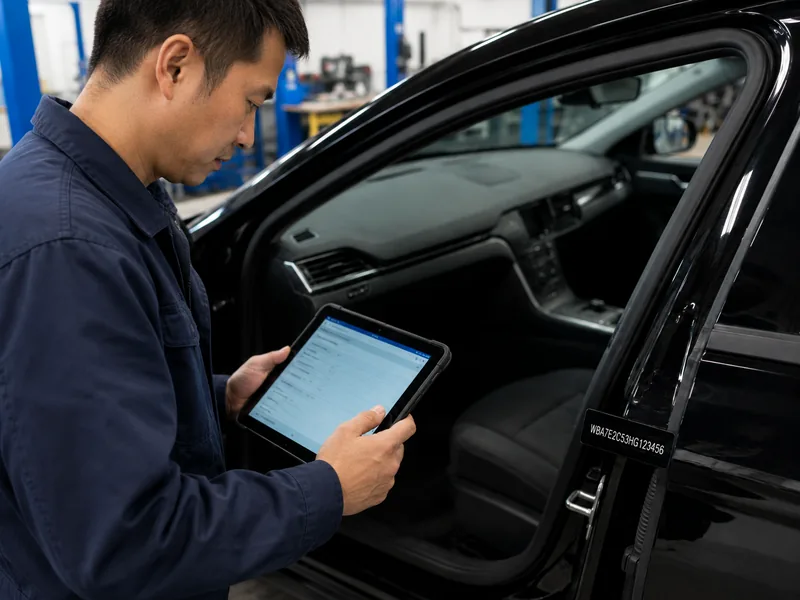
For modern vehicles, the VIN is a unique 17-character identifier. A decoder may return information such as manufacturer, model, body type, engine, model year and production plant. The amount and accuracy of decoded data varies because the underlying information is supplied by the manufacturer and because vehicle specifications differ by market.
Why the chassis code still matters
European parts buyers often work with chassis codes such as W212, F10, G11 or XC90. These codes are useful because workshop catalogs and parts lists frequently organize applications around a platform generation. A VIN can help identify the vehicle; the chassis code helps both sides communicate in the language used by the aftermarket.
VIN matching does not eliminate OE-number checks
A single VIN may still correspond to option-dependent suspension, brake or steering parts. Sport suspension, four-wheel drive, axle load, steering position and production changes can alter the component. Ask for the old-part number or catalog OE reference whenever possible.
A safer matching workflow
- Record the full VIN without spaces.
- Confirm make, model, model year and chassis/platform code.
- Identify the exact part position: front/rear, left/right, upper/lower.
- Compare the OE number and any superseded references.
- Use photographs and dimensions when the catalog result remains uncertain.
- Record the confirmed mapping in the purchasing file for future orders.
Protect customer information
The VIN is vehicle information, not a reason to request unnecessary ownership documents. Buyers should share only the information required for fitment checking and handle customer records appropriately.
For JASPEEDA inquiries, the most useful combination is usually: OE number, VIN or chassis code, model year, position, quantity and a clear photo of the old component. That combination reduces repeated questions and makes a quotation more dependable.