
When one shock absorber is leaking or damaged, a customer may ask to buy a single unit. Workshops often recommend replacing the companion unit on the same axle as well. For distributors, stocking and quoting left-right or axle pairs can reduce confusion and support more balanced repair outcomes.
Damping changes gradually
Shock and strut wear often develops over time. The unit on the opposite side may not leak, yet it has usually covered the same mileage and experienced similar road conditions. Installing one new unit beside one heavily worn unit can leave different damping performance across the axle.
Why balance matters
Ride-control components influence body movement, tire contact, steering response and braking stability. Uneven performance across an axle can result in inconsistent behavior during bumps, cornering or heavy braking.
What wholesalers should confirm
- Whether left and right units share the same part number.
- Whether the product is priced per piece, pair or axle set.
- Whether mounts, boots, bump stops or springs are included.
- Whether electronic connectors or adaptive-damping versions differ.
- Whether the cartons and labels clearly identify each side.
Inspect related components
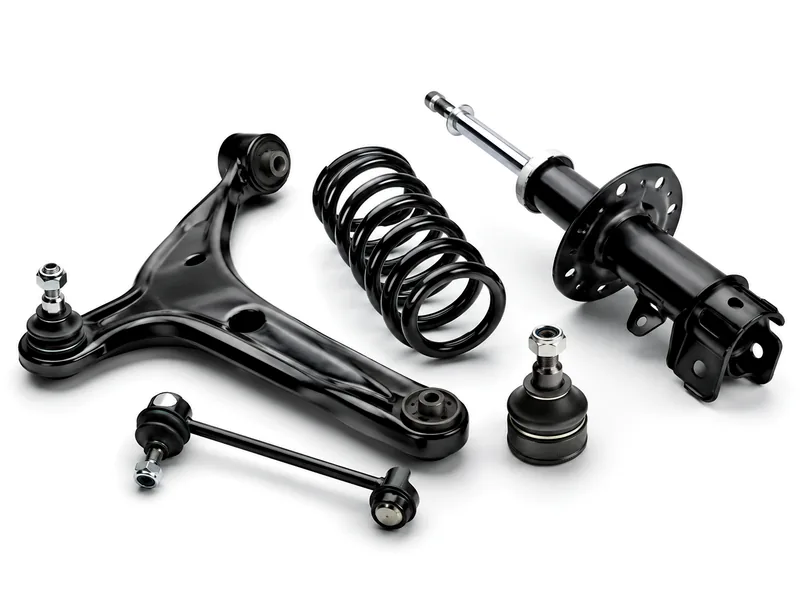
Replacing dampers without checking mounts, bearings, springs, bushings and tires can leave the underlying noise or handling issue unresolved. A distributor can add value by providing application-based kits or a list of commonly replaced companion parts.
Use symptoms carefully
Excessive bounce, body roll, nose dive, uneven tire wear, noise or fluid leakage can indicate worn ride-control components, but diagnosis should be carried out by a qualified workshop. Similar symptoms can come from tires, bushings, ball joints or wheel alignment.
When preparing a wholesale offer, state clearly whether the quotation is for one unit or an axle pair. That single line prevents a common ordering misunderstanding.