
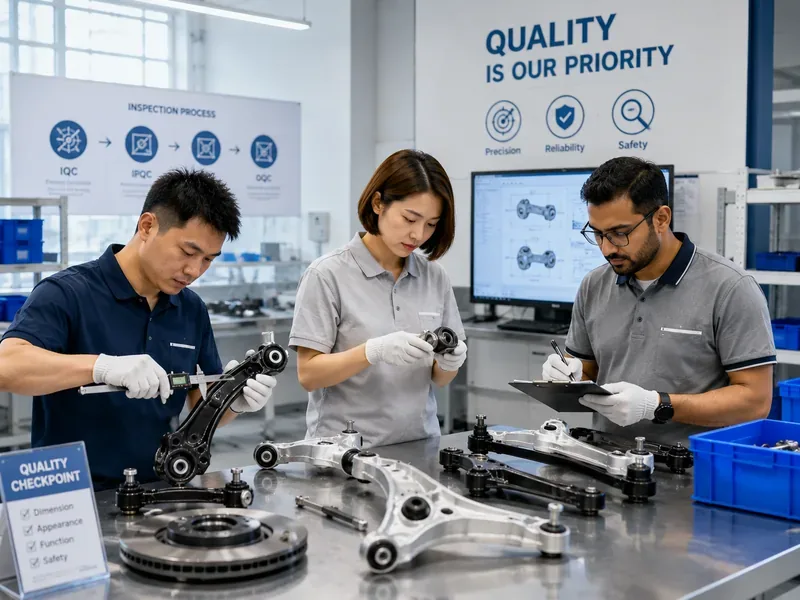
Quality control for chassis parts should be specific. A general statement such as “100% inspected” does not tell the buyer what was inspected, how it was measured or what happens when a result is outside the limit.
1. Identity and traceability
Check the product name, OE cross-reference, batch number, quantity and label. Mixed products with similar shapes are a common source of packing errors. A traceable batch makes later investigation much easier.
2. Visual inspection
Look for cracks, incomplete coating, damaged threads, sharp burrs, poor welds, contamination and deformed packaging. Inspection should cover both visible surfaces and less obvious areas around bushings and joints.
3. Critical dimensions
Measure mounting-hole distance, bushing diameter, ball-joint taper, overall length and other dimensions that determine fitment. The exact checkpoints depend on the part. Buyers can ask the supplier to show the measuring tool and reference drawing rather than only a final “pass” stamp.
4. Bushing and joint checks
Inspect rubber bonding, tearing, offset and hardness according to the agreed specification. For ball joints, review boot sealing, stud movement, thread condition and protective grease where required.
5. Surface and corrosion protection
Confirm that coating is complete and consistent. The inspection method may include visual checks, thickness measurement or corrosion testing, depending on the product and order requirement.
6. Packaging inspection
Verify inner protection, carton strength, labels, quantity per carton and pallet condition. Randomly open completed cartons to make sure the packed product matches the outside label.
7. Final shipment evidence
Ask for a short inspection summary with batch photos, quantities and any agreed test results. This is more useful than dozens of unrelated factory photographs.
Importers do not need to request every possible test for every order. The practical approach is to identify the most important risks for each product and agree on inspection points before production or packing begins.