
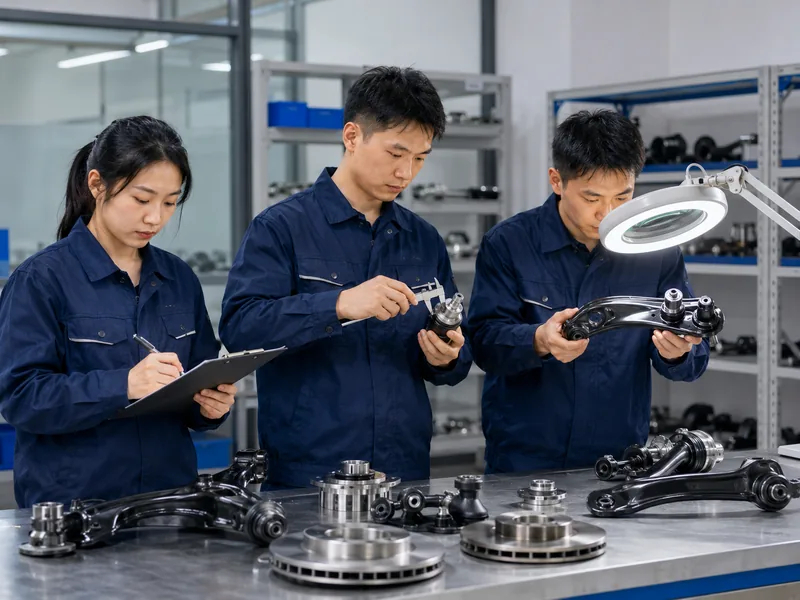
When a suspension component fails early, the first assumption is often “poor quality.” Manufacturing quality is important, but fitment, installation, road conditions and connected components can also shorten service life. A useful investigation looks at the whole system.
Incorrect application
A part may bolt into place but still have the wrong geometry, bushing specification or load rating. Confirm OE cross-references, chassis code, production range and left/right position.
Installation damage
Rubber-bushed arms are often tightened at the wrong suspension height. This preloads the bushing and can cause early tearing. Damaged threads, incorrect torque and impact-tool misuse also create problems.
Worn connected components
A new arm installed beside a badly worn mount, hub, strut or subframe bushing may experience abnormal movement. Workshops should inspect the surrounding system rather than replacing one visible part only.
Road load and vehicle use
Overloading, rough roads, repeated impacts and aggressive driving increase stress. A part’s expected life in ideal conditions may not represent severe local use.
Rubber and sealing quality
Weak bonding, unsuitable hardness or damaged boots allow movement, noise and contamination. Storage conditions also matter; rubber products should not spend long periods in extreme heat or direct sunlight.
Corrosion and contamination
Incomplete coating, road salt, moisture and chemicals can weaken surfaces or seize joints. Check whether the failure began with corrosion or mechanical overload.
How buyers should handle a complaint
Collect the OE number, batch code, mileage, installation date, vehicle details and clear photos. Keep the failed part when possible. A structured report gives the supplier something useful to investigate.
The goal is not to avoid responsibility. It is to identify the real cause so that the next batch, installation or product choice can be improved.