
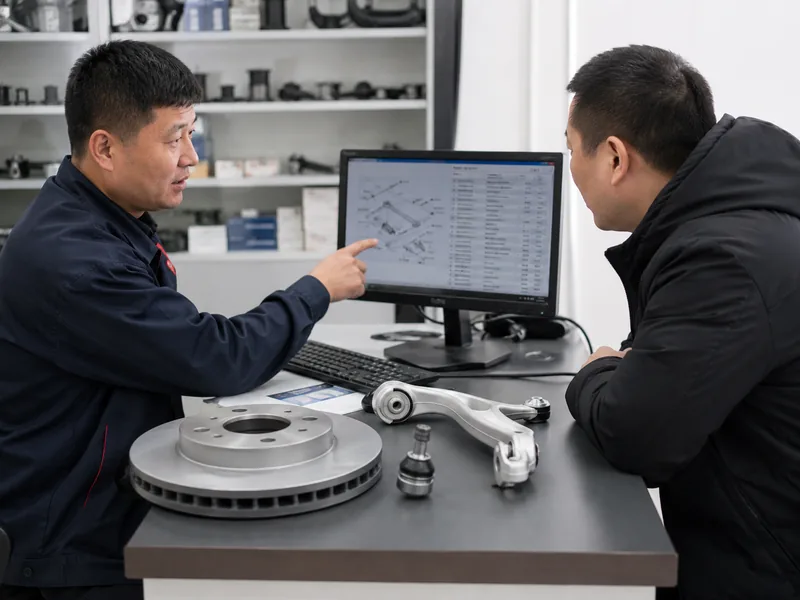
When a buyer sends a clear OE number, product matching can be quick. When the inquiry only says “BMW control arm” or “Mercedes suspension part,” the supplier has to guess which generation, position and specification the buyer means. That is where delays and wrong quotations begin.
Start with the OE number—but do not stop there
The OE number is usually the strongest reference because it points to a particular original-equipment application. Enter it exactly as it appears on the old part, package, catalog or repair record. Keep both spaced and unspaced versions when possible because different databases format the same number differently.
One aftermarket part may cross-reference several OE numbers. That does not automatically mean every number is interchangeable in every market. Ask the supplier to confirm the full list and state which vehicle applications have been checked.
Add the vehicle details
Provide the brand, model, chassis code, production year and engine information. For some products, left-hand-drive and right-hand-drive versions may differ. A photo of the vehicle identification label can help, but avoid sending personal ownership documents that are not necessary.
Use photos to resolve doubtful matches
Photograph the complete part, mounting points, bushings, joints and any molded or stamped numbers. Place a ruler beside the part when dimensions may matter. A clear side-by-side comparison is more useful than several dark photos taken from the same angle.
Check position and quantity
Write front or rear, left or right, upper or lower. Also state whether the quantity is pieces, pairs, sets or cartons. These small details affect both price and packing.
A simple inquiry format
- OE number
- Vehicle brand, model, chassis code and year
- Part name and position
- Required quantity
- Photos or dimensions when available
- Destination country and packaging request
JASPEEDA uses this information to organize the inquiry before preparing a quotation. A few accurate details at the start can save far more time than correcting a wrong order later.