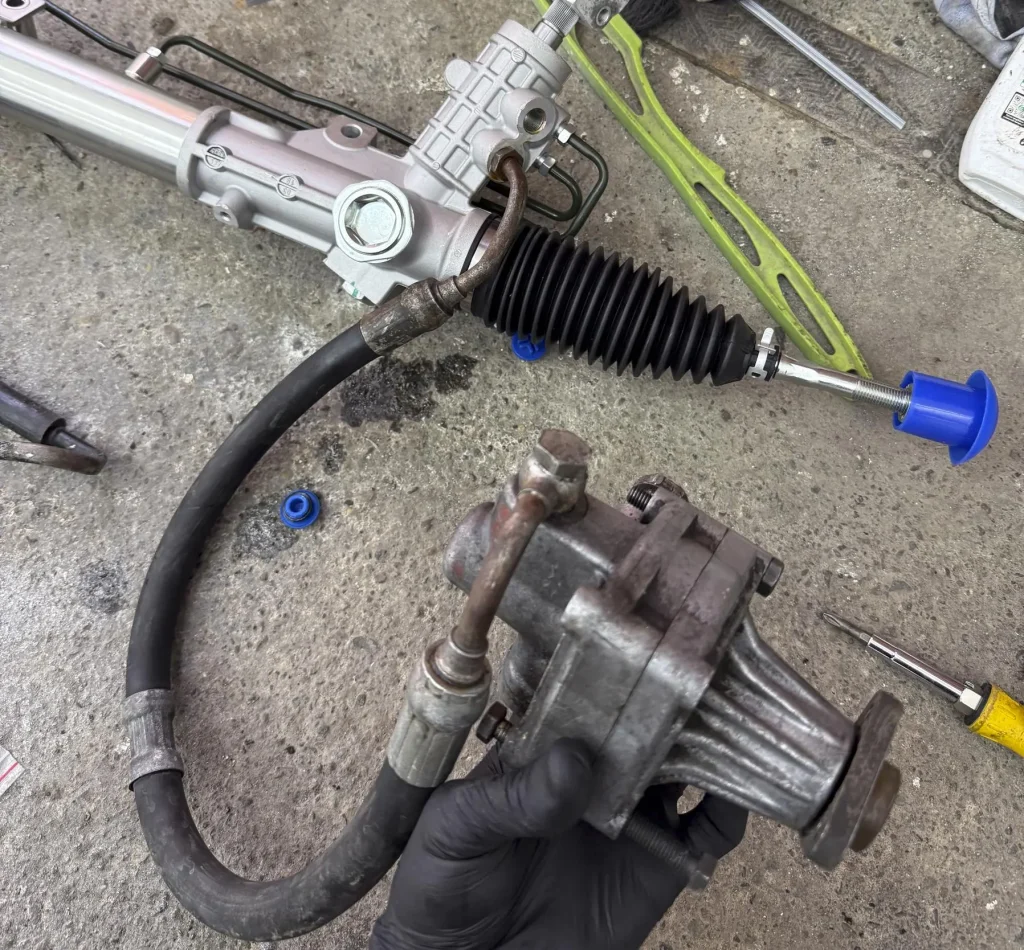
A customer says the steering feels heavy and asks for a power steering pump. Before anyone prepares a quote, there is one useful question: does this vehicle actually have a hydraulic pump?
That question matters because electric vs hydraulic steering is not simply a choice between two versions of the same part. The systems create steering assistance in different ways, and a similar complaint does not prove the same component has failed.
What happens in a hydraulic steering system?
In a conventional hydraulic power steering setup, a pump supplies pressurized fluid to help move the steering gear. The system also includes hoses or pipes, seals, a fluid reservoir in many designs, and a steering rack or gearbox configured for hydraulic assistance.
A leak, an unusual noise or inconsistent assistance can give a workshop reasons to inspect the hydraulic system. But those symptoms are not enough to name the failed part. Fluid condition, drive components, lines, pump performance and the steering gear may each need checking according to the vehicle’s service procedure.
For an importer, the practical point is simple: a pump and a steering rack are different products. An OE number for one should never be treated as a reference for the other.
How electric power steering changes the parts list
Electric power steering, often abbreviated EPS, uses an electric motor and electronic controls to provide assistance. Depending on the vehicle, the motor may be associated with the steering column or steering gear. A conventional engine-driven hydraulic assist pump may not be present at all.
This is why a request for “steering pump” can lead a supplier in the wrong direction. The buyer may actually need an electric steering rack assembly, a column-related unit or another component. A warning message or heavier steering can also involve power supply, sensor or control-system faults rather than a failed mechanical assembly.
Electronic steering components can require coding, calibration or other manufacturer-specific procedures after replacement. A matching outline and mounting points alone do not establish compatibility.
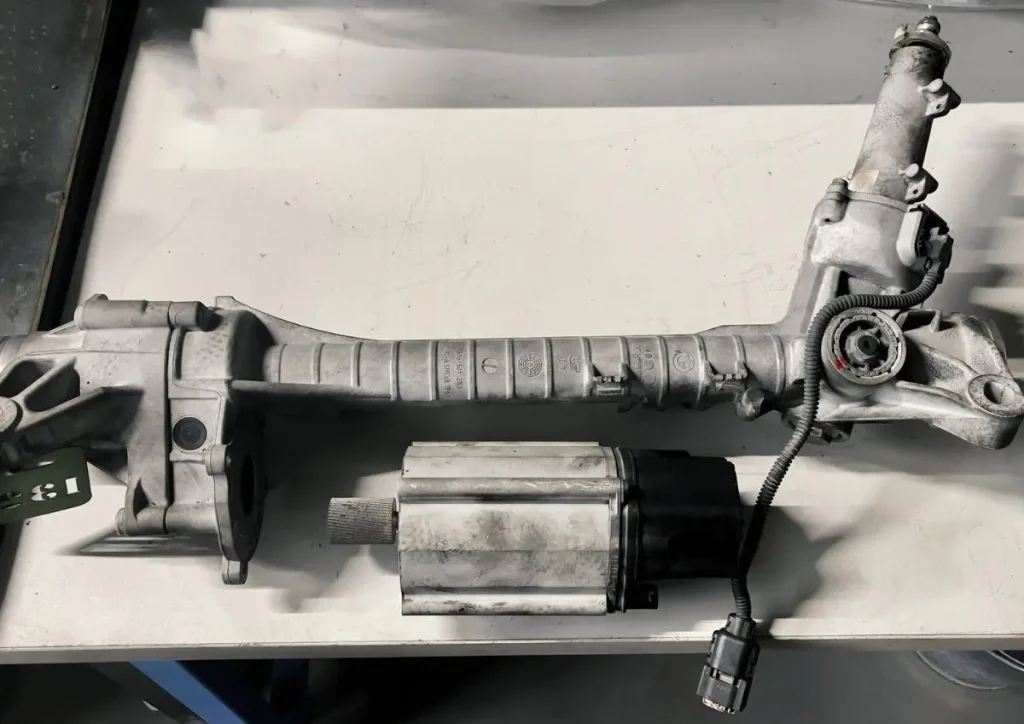
There is also an electro-hydraulic system
Some vehicles use electro-hydraulic power steering, sometimes called EHPS. It combines a hydraulic steering mechanism with an electrically driven pump unit. The pump is not necessarily driven by an engine belt, yet the steering assist still relies on hydraulic fluid.
This third category explains why “electric” and “hydraulic” are sometimes used loosely in parts enquiries. A supplier who has only the vehicle’s model name may not know whether the requested unit is an EPS rack, a conventional hydraulic pump or an electro-hydraulic motor-pump assembly.
Rather than arguing over terminology, request a photo of the old unit, its OE label and the vehicle information. Then confirm the system type against a reliable catalogue.
Three things worth checking before a steering quotation
1. Identify the actual assembly. Is the customer ordering a complete rack, a pump, a motor-pump unit, an inner tie rod, or a different steering component? Some parts are sold separately; others may be supplied as assemblies.
2. Compare the connections and mounting arrangement. Hydraulic ports, electrical connectors, mounting brackets, shaft interfaces and other visible details can help identify a mismatch. Photos are useful evidence, but they do not replace OE and application checks.
3. Check the vehicle configuration. The VIN, production date, steering side (left-hand drive or right-hand drive), and electronic variant can matter. For certain EPS assemblies, software or calibration requirements are part of the repair planning.
If two references appear interchangeable in an aftermarket listing, ask the supplier to explain the documented relationship. Do not assume every revision or market version can be fitted without additional steps.
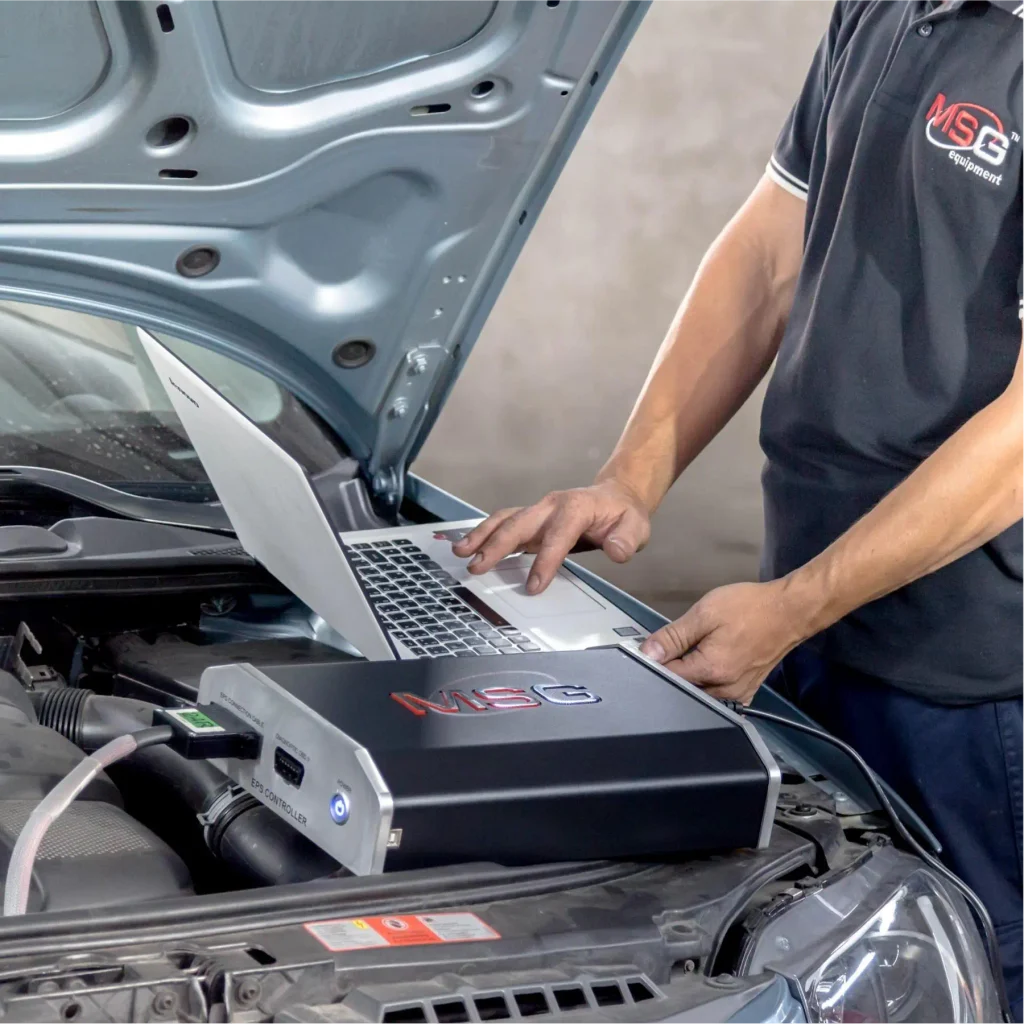
When the workshop reports a steering problem
Suppose a repair shop sends “steering is stiff after start-up.” That is a symptom, not a purchase order. A useful follow-up might be: “Can you confirm the fitted steering system, OE number on the old unit, fault codes if available, and whether the workshop has diagnosed the failed part?”
For safety, troubleshooting and replacement should follow the vehicle manufacturer’s instructions and be carried out by qualified technicians. A parts supplier can help identify and source the requested component, but should not guess a diagnosis from a short chat message.
Make the next order easier
Record verified system type, OE reference, vehicle configuration, product photos and any installation-related notes separately. That small habit prevents a hydraulic pump enquiry from being quoted as an electric rack and helps the buyer compare like with like.
JASPEEDA handles enquiries for selected steering replacement parts. Send your details with the OE reference, vehicle/VIN information, quantity and destination country for a product match review.