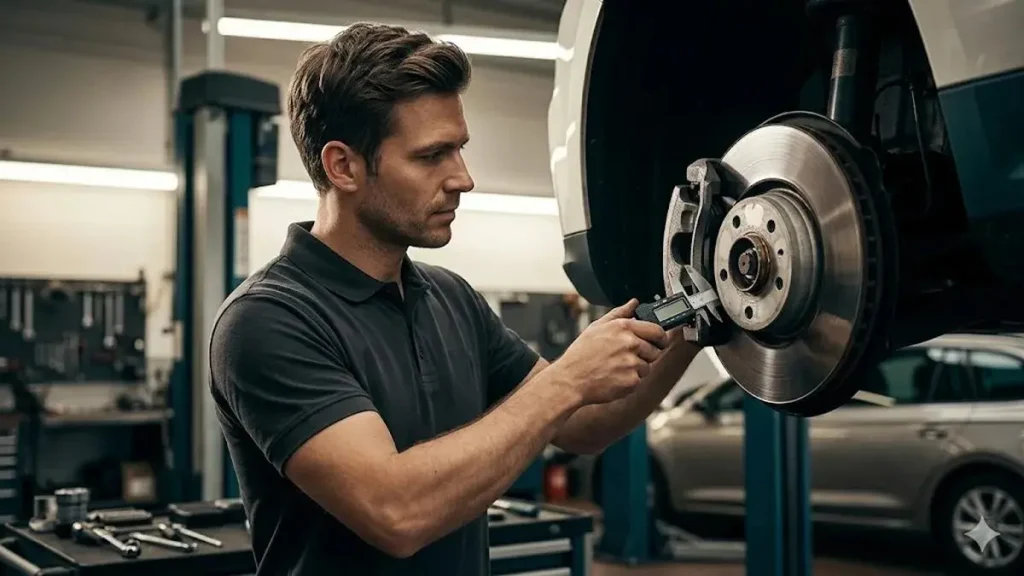
A customer asks for front brake discs for a European sedan. The model and year are on the message, so the order looks straightforward. Then the parts catalogue returns two disc options. Both appear to fit the same vehicle family, but their dimensions are different. Which one should go into the quotation?
This is where brake disc fitment becomes more important than a familiar model name. For importers and repair shops, one missing brake specification can turn a simple replenishment order into a return.
The model name does not tell the whole story
A vehicle range can have different braking systems according to engine, production period, equipment package, or market. A visually similar brake disc may belong to a different axle or brake setup. Catalogue results can also include different coatings or product lines that share basic dimensions.
So a message such as “front discs for a BMW” is not enough to approve a part. Even a year and model may need supporting information. Use the VIN and the vehicle manufacturer’s parts data where available; then compare the actual brake components.
Brake disc size: the measurements that matter
The outside diameter is an obvious starting point, but it is only one part of the match. Depending on the design, the supplier may also need to confirm:
- Disc thickness: The specified thickness of a new disc, not the wear limit printed on a used one.
- Overall height: The distance associated with the disc’s mounting bell or hat. It affects how the disc sits relative to the hub and caliper.
- Center bore and mounting pattern: The features that locate and secure the disc to the hub.
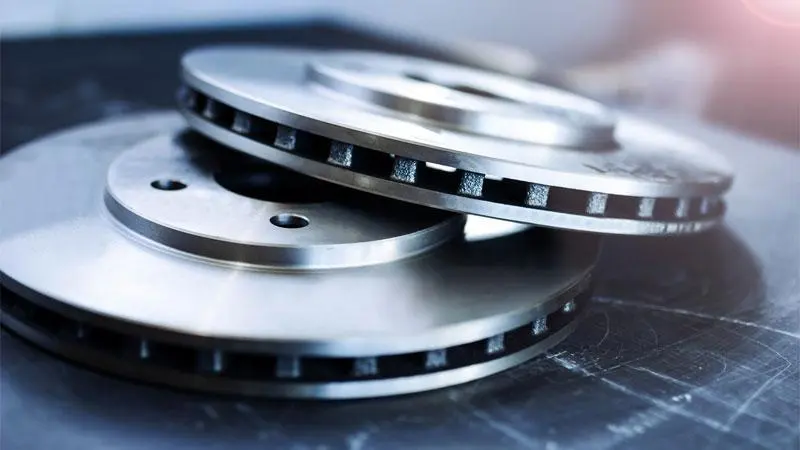
- Solid or ventilated design: Different construction that must match the approved application.
- Axle and brake-system variant: Front or rear, and any relevant caliper or equipment code.
The dimensions are not values to estimate from a product photograph. Ask for a drawing or a reliable catalogue entry. If the old disc is available, a qualified technician can record its identifying marks and measurements for comparison.
Do not confuse wear limits with ordering dimensions
A workshop may send a photograph of a worn rotor marked with a minimum-thickness value. That marking tells the technician when the disc is no longer within its permitted service limit. It is not necessarily the original thickness used to identify a new part.
For a disc already in service, surface grooves, corrosion, heat marks and uneven wear may also need attention. Whether it should be replaced is a workshop inspection decision made against the manufacturer’s specifications, not a judgement based on a sales photo. Brake components are safety-critical: installation and inspection belong with qualified technicians.
Check what comes with the brake pads
Disc selection does not end with the rotor. A buyer may be ordering pads, pad wear sensors, retaining hardware and discs together. These items are related, but they do not automatically come in one package.
For example, an enquiry that says “complete front brake set” leaves several unanswered questions. Does it mean two discs and one axle set of pads? Are wear sensors required? Is the customer expecting mounting screws or clips? If a supplier quotes only discs, the price comparison becomes misleading.
Keep each item on its own line in the purchase list. Record the OE reference, axle, quantity, any approved brand preference and what the quotation includes. This makes the warehouse check much easier later.
A practical request before you buy
Imagine two candidate discs have the same outside diameter, but the listed heights differ. Do not choose the cheaper one and hope the mechanic can make it fit. Send the supplier a short verification note:
“Please confirm the brake disc OE reference, diameter, new thickness, overall height, center bore, mounting-hole details, axle position and exact application. If there are two versions, please explain the difference and share the catalogue reference.”
Ask for a clear photograph of the actual product and its label when appropriate. If the supplier cannot explain a discrepancy, keep the item pending instead of converting uncertainty into an order.

Better data makes repeat orders easier
Once a specific application has been confirmed, save the evidence with the item record: catalogue page, OE reference, approved dimensions, supplier part number and the customer’s vehicle details. Do not merge two versions into one SKU simply because they look alike.
For distributors, that record turns a one-time fitment check into a more reliable repeat-order process. For workshops, it reduces the chance of opening the wrong box when the vehicle is already on a lift.
JASPEEDA supports enquiries for brake and chassis replacement parts. Contact us with your OE reference, vehicle information, required quantity and destination country so the relevant part can be reviewed before quotation.