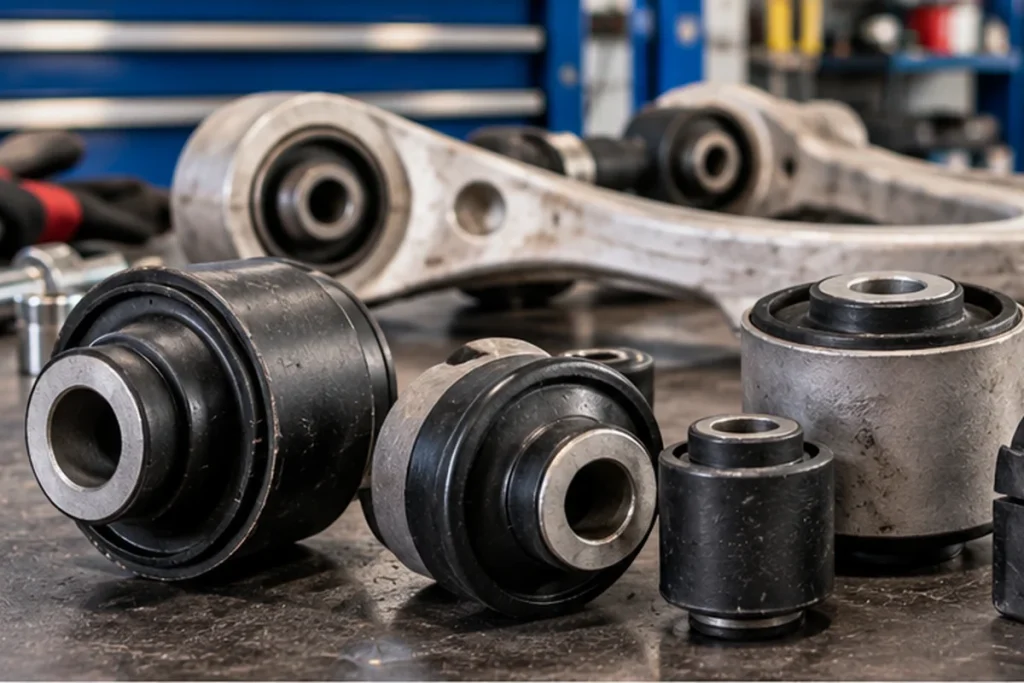
Rubber suspension bushings may look small, but they do an important job. They absorb vibration, reduce noise and help keep suspension movement controlled. When the bushing quality is poor or the fit is wrong, the vehicle may develop noise, looseness, uneven tire wear or unstable handling.
For importers, wholesalers and repair-focused buyers, bushings are also one of the parts most likely to create return problems if they are chosen only by price. Before ordering, it is worth checking a few details carefully.
What Are Rubber Suspension Bushings?
Suspension bushings are flexible rubber or rubber-metal components installed between suspension parts and the vehicle frame. They are commonly used in control arms, stabilizer bars, engine mounts and other chassis connection points.
The main purpose of a suspension bushing is to isolate vibration while allowing limited controlled movement. A good bushing helps improve comfort and keeps the suspension working as intended.
Why Buyers Should Check Bushings Carefully
Bushings are often treated as simple parts, but they are not always interchangeable. Two bushings may look similar in photos while having different inner diameter, outer diameter, rubber hardness, sleeve design or installation position.
This is why many buyers run into problems after purchase. The issue is usually not just the part number. It is often a combination of fitment, quality level and application detail.
1. Confirm the OE Number First
The safest starting point is the OE number. If the original OE reference is confirmed, the chance of ordering the wrong bushing is much lower.
Ask your supplier to check the OE number against the vehicle application before quoting. If the customer only provides a photo or model name, request the VIN when possible.
If you often buy by part number, you can also read our related guide: How to Check OE Numbers Before Ordering Auto Parts.
2. Check the Installation Position

Not every suspension bushing fits the same location. Position matters.
- Front or rear
- Left or right
- Upper or lower
- Inner or outer
Some buyers confirm the OE number but miss the installation position. This can still lead to fitment problems, especially for control arm bushings and trailing arm bushings.
3. Look at the Material Quality
The rubber compound has a direct effect on service life and driving feel. Low-quality rubber may crack early, deform under load or become too soft after a short period of use.
When checking suspension bushings, ask about:
- Rubber quality and durability
- Resistance to heat, oil and road conditions
- Metal sleeve quality
- Bonding between rubber and metal
For buyers working in hot climates, rough roads or heavy-use markets, material quality matters even more.
4. Compare Size and Structure
Even if the part number looks correct, dimensions should still be checked when possible. Key details include:
- Inner diameter
- Outer diameter
- Overall length or width
- Sleeve structure
- Grooves, flanges or special shape details
Small structural differences can affect installation or service life. This is especially common when multiple replacement versions exist for the same vehicle family.
5. Check the Vehicle Application Range
Many suspension bushings fit more than one model, but application lists must still be reviewed carefully. A bushing may fit several Mercedes-Benz, BMW or Volkswagen platforms, but not every year or suspension version.
The supplier should be able to confirm the brand, model, chassis code and year range. If needed, verify the engine or suspension type as well.
To reduce application mistakes, you may also find this useful: VIN vs OE Number: 4 Essential Checks for Auto Parts Buyers.
6. Ask About Durability, Not Just Price
Cheap bushings can look acceptable at first, but if the rubber fails early, the total cost becomes much higher because of complaints, labor claims and repeat replacement.
Before placing an order, ask practical questions:
- How is the rubber hardness controlled?
- Has the product been tested for durability?
- Is the bushing designed for standard road use or heavier use?
- Are there return cases from previous customers?
For distributors and repair-focused buyers, stable quality usually matters more than the lowest unit price.
7. Review Packaging and Supplier Consistency
Packaging is not the most important factor, but it still matters for export business. Bushings should be packed clearly, with correct labels and part identification. Mixed labels or unclear OE references can create confusion in warehouse handling.
It is also worth checking whether the supplier can keep quality stable across repeat orders. A sample may look fine, but batch consistency is what matters in real business.
If you are evaluating suppliers, see also: Auto Parts Supplier Checklist: How to Evaluate Before Ordering.
Common Problems Buyers Face
Here are some common issues seen in suspension bushing orders:
- Wrong OE match
- Wrong installation position
- Rubber too soft or too hard
- Premature cracking
- Metal sleeve looseness
- Different structure from the original part
- Application list too broad or inaccurate
Most of these problems can be reduced before ordering if product details are checked carefully.
What to Send When Requesting a Quote
To get a faster and more accurate quotation, send the following details:
- OE number
- Vehicle brand and model
- Year range
- Installation position
- Required quantity
- Destination market
If the OE number is uncertain, send the VIN or a clear photo of the original part.
Final Thoughts
Rubber suspension bushings are small parts, but they should not be chosen casually. Buyers should confirm the OE number, installation position, material quality, dimensions and vehicle application before placing an order.
A careful check at the beginning can help avoid returns, complaints and unnecessary replacement cost later.
If you are looking for suspension bushings or related chassis parts, send us the OE number or vehicle details. JASPEEDA can help check fitment and support your inquiry with product information before quotation.