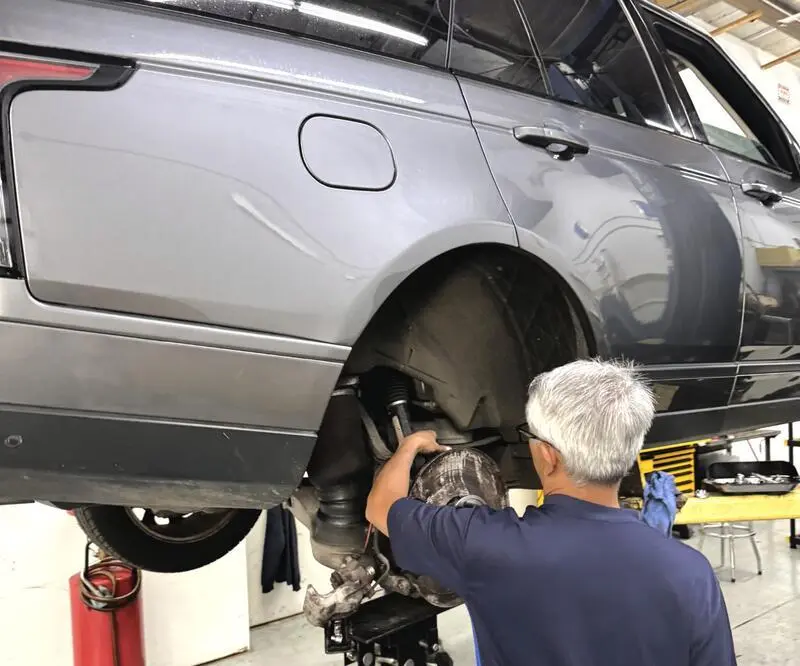
A vehicle sits lower on one side after being parked overnight. The owner hears the air suspension compressor run again and asks a workshop to replace it. That sounds plausible, but ordering a compressor immediately could leave the original fault untouched.
An air suspension leak can make the compressor work more often as the system tries to restore ride height. If that continues, the compressor itself may eventually suffer damage. The important question is not only which part has stopped working, but why the system lost pressure in the first place.
The air spring and compressor have different jobs
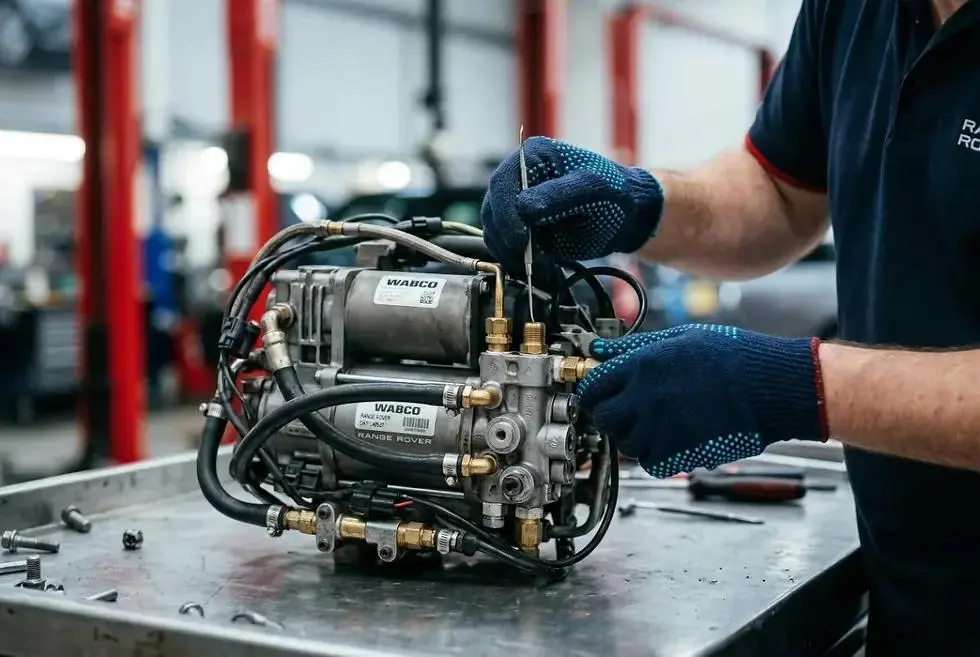
An air spring supports the vehicle through a pressurized air chamber. An air strut combines an air spring with a damping component in one assembly. The compressor supplies compressed air, while valves and control components direct airflow as required by the system.
These parts are connected, but they are not interchangeable. A leaking air spring does not become a compressor problem simply because the warning light appears. Likewise, a compressor that fails to run may have a power, relay, wiring or control issue.
This distinction matters to an importer. “Air suspension kit” can mean different contents depending on the supplier. Ask whether the quotation is for a complete air strut, an air spring alone, a compressor assembly or another component.
What the symptoms can tell you—and what they cannot
A corner that drops when parked may suggest an air leak. It does not identify the failed part with certainty. A compressor that cycles unusually often can also point to air loss elsewhere in the system.
The opposite complaint is possible, too: the vehicle does not rise when commanded. That might involve the compressor, electrical supply, height sensors, valve block or other faults. Different vehicle systems respond differently, so a short customer video or dashboard message is a starting point rather than proof.
A workshop should record when the symptom occurs, whether one or more corners are affected, and any fault codes available from the appropriate diagnostic equipment.
How a workshop can narrow down an air leak
A qualified technician may inspect the condition of air springs, fittings, air lines and related components using the correct factory service method. A suitable leak-detection solution can help reveal escaping air at accessible joints or rubber surfaces, but a visible bubble test does not prove every other part is healthy.
Air suspension systems can remain pressurized and may move automatically. Technicians need to follow manufacturer lifting, depressurizing and support procedures. Owners should not crawl under a vehicle with a suspected suspension problem or disconnect lines simply to look for a leak.
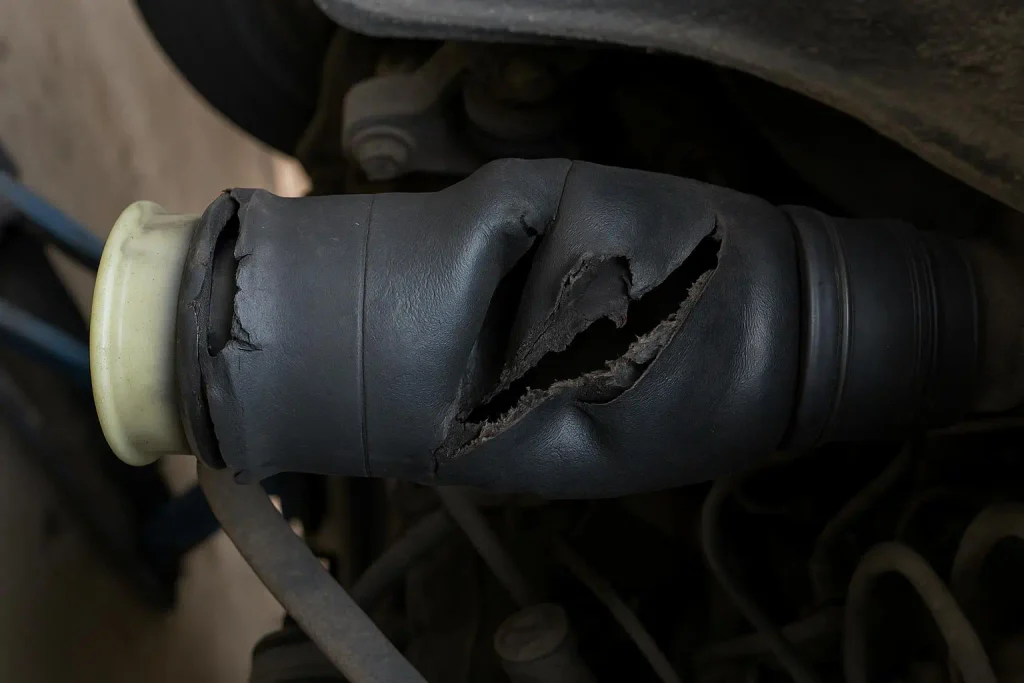
The rubber sleeve deserves attention, especially where it folds during suspension movement. Cracks, abrasion and contamination can be clues. Lines and connectors should also be inspected for damage. If a new compressor is installed while a significant leak remains, the new unit may be forced into the same excessive workload.
Ask about the valve block and electrical controls
It is easy to focus on the two most visible items—the air spring and the compressor—and forget the rest of the system. A valve block controls the routing of compressed air. Faults in fittings, valves, height sensors or electrical connections can affect operation and may imitate other symptoms.
This is why a useful workshop report contains more than the word “sagging.” It records diagnosis, fault codes where available, vehicle configuration and the part actually identified for replacement. Some repairs also require system initialization or calibration following the manufacturer’s instructions.
What an importer should request before buying
For a reliable quotation, collect the OE number, vehicle VIN, production period, axle and side, and a photograph of the existing assembly or label. Clarify whether the customer wants an air spring, complete air strut, compressor, relay or valve block.
If the order includes a compressor, ask the workshop whether leaks and related electrical faults have been checked. If a supplier offers a kit, request a written list of exactly what it contains. Do not advertise brackets, relays or other accessories as included without confirmation.
Air springs for visually similar vehicles may differ in mounting, fittings, height-control features or electronic configuration. Treat apparent shape matches as a reason to investigate, not a guarantee of fitment.
A better conversation with the customer
Instead of replying with a price as soon as a buyer writes “air suspension problem,” try: “Which part has the workshop confirmed as faulty? Please send the OE reference, VIN, installation position and a clear photo of the existing part.”
That single question keeps the conversation focused on a verified replacement, not a guessed repair. JASPEEDA can review selected suspension-part enquiries by OE and vehicle information. Contact us with the required part, quantity and destination country before requesting a quotation.