
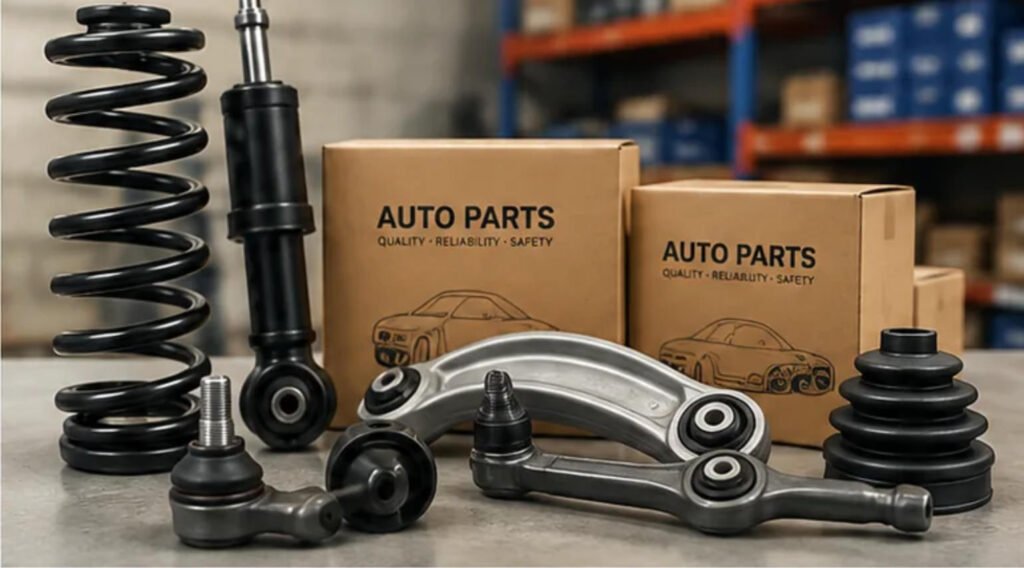
Choosing an auto parts supplier is not only about finding the lowest price. Before placing an order, buyers need to confirm product quality, fitment information, packaging, communication and delivery capability.
A low quote can look attractive at first, but it does not show whether the parts are consistent, whether the supplier understands OE-based enquiries, or whether problems can be handled properly after shipment. This checklist helps buyers compare suppliers before committing to an order.
Many auto parts buyers start with a simple question: “What is your best price?” It is a normal question, but it is not enough. A low quote does not tell you whether the parts will fit, whether the boxes will survive shipping, whether the supplier can handle repeat orders, or whether they will help you when a customer sends a claim.
If you want a safer buying process, you need to evaluate an auto parts supplier before you place a serious order. The goal is not to make the process complicated. The goal is to check the small things that usually create big problems later.
1.Check the Auto Parts Supplier’s Main Product Range
The first thing to check is whether the supplier actually focuses on the parts you need.
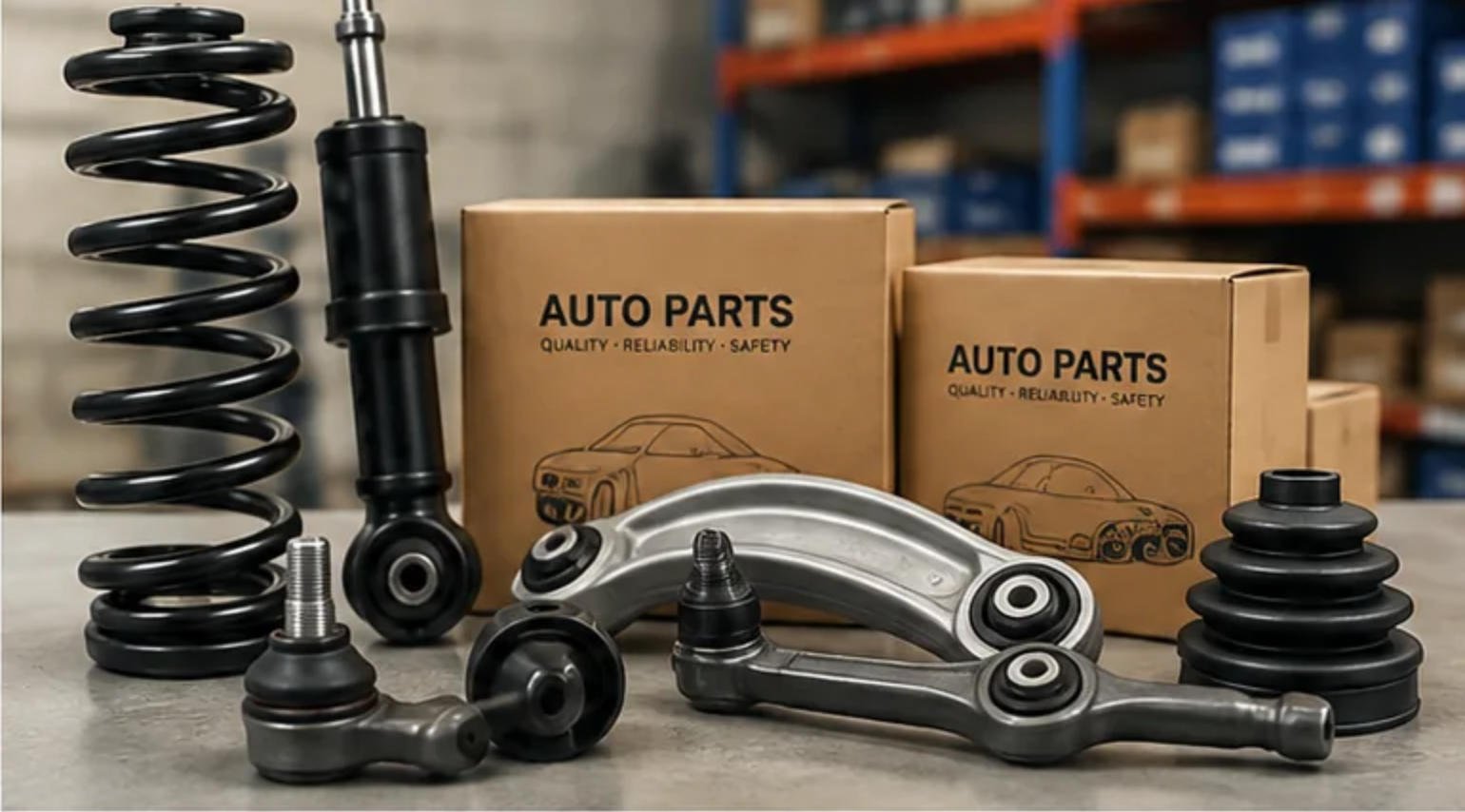
A company that sells “all auto parts” may still be useful, but it may not be strong in your category. If your business is mainly chassis parts, look for a supplier that understands control arms, ball joints, stabilizer links, bushings, shock absorbers, tie rod ends and wheel bearings. These products have fitment details, material differences and quality risks that a general trader may not handle well.
Ask simple questions:
- Which categories are your strongest?
- Which vehicle makes do you cover best?
- Do you have your own catalog by OE number?
- Can you provide product photos and application information?
A reliable auto parts supplier should answer these questions clearly. If every answer is vague, you may spend too much time correcting basic product information later.
2. Check OE number and fitment support
In auto parts sourcing, fitment is often where money is lost.
A product may look similar, but a small difference in length, mounting hole, bushing size or left/right position can make it unsuitable. This is why OE number support is important. When you send an OE number, the supplier should be able to confirm the product, application, position and, when necessary, compatible cross numbers.
Do not accept only “yes, it fits” as an answer for important items. Ask for proof in a practical way:
- product photo;
- OE number list;
- application list;
- side or position confirmation;
- packaging label sample;
- comparison photo if the item has similar versions.
This step is especially important when buying suspension and steering parts. Wrong fitment causes returns, customer complaints and wasted shipping cost.
3. Look at product quality beyond appearance
A clean product photo is not the same as stable quality.
When you evaluate an auto parts supplier, ask about the parts that affect service life. For chassis parts, this may include rubber quality, ball joint grease, dust boot sealing, welding, coating, material thickness and dimensional control. For bearings or engine-related parts, the key points may be different, but the idea is the same: find out what the supplier controls and how they control it.
You do not need to ask for a huge technical report on every small order. But a professional supplier should be able to explain the basics. They should know what material is used, what tests are common for the product, and what quality level they are offering.
If a supplier only talks about price and avoids every quality question, be careful. Cheap parts can still be good value, but only when the quality level is honestly explained.
4. Review sample handling before bulk orders
Samples are not always necessary, but they are useful when the product is new, the order value is high, or the market has strict requirements.
A sample helps you check appearance, dimensions, packing style and product labeling. It also helps you judge the supplier’s working attitude. Did they send the correct sample? Was the label clear? Did they protect the part properly? Did they follow your request, or did they send whatever was easiest?
For importers, a small sample check can prevent a much larger problem later. Even if you skip samples for low-risk products, consider them for high-volume items, new OE numbers or parts with a history of fitment complaints.
5. Check packaging before the shipment leaves
Packaging is not just a box. It is part of the buying decision.
Auto parts can pass through several hands before reaching the final customer: factory, local warehouse, forwarder, container, destination warehouse, distributor and repair shop. Poor packaging can damage rubber boots, scratch coated surfaces, crush cartons and create a bad first impression.
Before confirming a supplier, ask for packaging photos. For heavier parts, check whether the outer carton is strong enough. For parts with rubber boots or polished surfaces, check whether inner protection is suitable. For mixed orders, make sure labels are readable and consistent.
Good packaging reduces claims. It also makes your warehouse work faster.
6. Test communication speed and accuracy
Communication is a real business cost.
Some suppliers reply fast but provide incomplete information. Others reply slowly but accurately. The best suppliers do both: they respond within a reasonable time and answer the actual question.
When you evaluate a supplier, pay attention to their communication during the first few conversations. Do they confirm the OE number clearly? Do they send the correct photos? Do they explain uncertainties, or do they hide them? Do they understand export documents, packing marks and mixed SKU orders?
A supplier who communicates clearly before payment is more likely to help you after payment. A supplier who is already confused at the quotation stage may become much harder to manage once goods are in production.
7. Ask about lead time and repeat order stability
One successful order is not enough. If you are building a serious auto parts business, repeat supply matters more.
Ask about normal lead time, stock availability and production planning. If you plan to order the same SKU regularly, ask whether the supplier can keep stable quality and packaging over time. If your market depends on fast-moving items, stockouts can cost you customers.
For a new supplier, it is smart to start with a focused trial order. Choose products that are easy to inspect and relevant to your market. After the trial order, check product quality, packaging, delivery time and after-sales response. If the supplier performs well, expand gradually.
8. Understand how claims are handled
Even good suppliers can have problems. The difference is how they handle them.
Before a larger order, ask what information is needed for a claim. Usually, a professional process includes photos, videos, quantity details, batch information, installation feedback and sometimes sample return. A supplier who has a clear claim process is easier to work with than one who simply says “no problem” before the order and disappears after a complaint.
You should also do your part. Keep photos of received goods, cartons and labels. Record customer complaints clearly. The more organized your claim evidence is, the easier it is to solve problems fairly.
A simple supplier evaluation checklist
Before placing a serious order, check these points:
- Main product range matches your business.
- OE number and application support are clear.
- Product photos and labels are available.
- Quality level is explained honestly.
- Sample or trial order is possible.
- Packaging is suitable for export shipping.
- Communication is fast and accurate.
- Lead time is realistic.
- Repeat order support is stable.
- Claim handling process is clear.
You do not need a perfect supplier. You need a supplier whose strengths and limits you understand.
Before confirming an order, buyers should also verify the OE number and vehicle details. See our guide on how to check OE numbers before ordering auto parts.
Final thoughts
A reliable auto parts supplier helps you reduce risk before it becomes expensive. They provide clear product data, stable quality, useful photos, practical packaging and honest communication. They also help you avoid wrong parts, delayed shipments and unnecessary returns.
The best time to evaluate an auto parts supplier is before the first serious order, not after a problem appears. Take a little more time at the beginning. Ask better questions. Check the details. Start with a trial order when needed.