
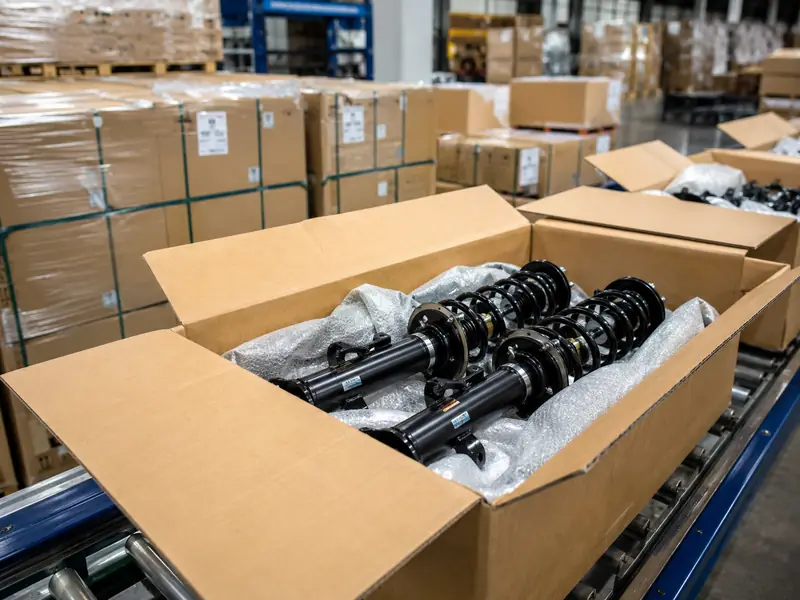
auto parts export packaging 、Auto Parts Export Packaging Checklist
Auto parts export packaging is not a small detail. It protects the product, reduces claims, improves warehouse handling, and shapes how customers judge your business.
Many buyers discuss packaging at the end of the order, after price and lead time. That is understandable, but it often creates trouble. By then, the supplier may have already planned the cheapest packing method.
Inner protection matters most
The part should not move freely inside the box. Metal parts need separation. Rubber boots should not be compressed. Precision areas should be protected from impact and moisture.
Bubble wrap, foam, plastic bags, and protective caps are simple materials, but they need to be used correctly. A part loosely placed in a carton is not properly packed.
Carton strength should match the product
Heavy parts need stronger cartons. Mixed shipments need enough structure to survive stacking, loading, unloading, and warehouse movement.
Weak cartons collapse under pressure. Once the carton fails, labels fall off, parts get scratched, and warehouse teams spend more time sorting problems.
Labels should be easy to read
A clear label helps every person who touches the goods. It should show product name, OE number if relevant, quantity, side or position, and barcode when needed.
For brand owners, label consistency is even more important. A clean label makes the product easier to store, sell, and identify.
Rubber and painted surfaces need special care
Rubber boots, bushings, and painted metal surfaces can be damaged during transport. Once a boot is torn or a surface is badly scratched, the customer may reject the part even before installation.
Ask suppliers to show packaging photos before shipment. Do not wait until the goods arrive to discover weak inner protection.
Carton marks should match the order
Outer carton marks should match the packing list and purchase order. This avoids confusion when products arrive at the warehouse.
For mixed SKU shipments, clear carton marks are especially useful. They reduce picking mistakes and shorten receiving time.
Packaging affects brand value
If you are building your own auto parts brand, packaging is part of the customer experience. A tidy box, clear label, and protected product make the buyer feel more confident.
Poor packaging creates the opposite feeling. Even when the part is usable, messy packing makes the product look cheap.
Check packaging before large orders
Before a large shipment, ask for sample packing photos or physical samples. Confirm inner protection, carton size, carton strength, label content, and outer marks.
Auto parts export packaging protects more than the product. It protects your margin, your warehouse efficiency, and your customer relationship. Treat it as part of the order, not an afterthought.
Final Auto Parts Export Packaging Checklist
Before the cartons are sealed, confirm that the parts, OE references and quantities match the final order. Each inner box should carry a clear part number, product name and quantity label so the buyer can identify the goods without opening every package.
Check that metal parts are protected against moisture and surface damage. Rubber bushings, boots and seals should not be pressed against sharp edges or exposed to oil during packing. Heavy parts must be separated with strong dividers or cushioning to prevent movement inside the carton.
Finally, check the carton strength, gross weight, shipping marks and total package quantity. Take clear photos before loading and keep them with the order record. These checks provide useful evidence if any damage, shortage or labeling problem is reported after delivery.
Need help choosing the right product? Visit our product catalog or send us an inquiry.